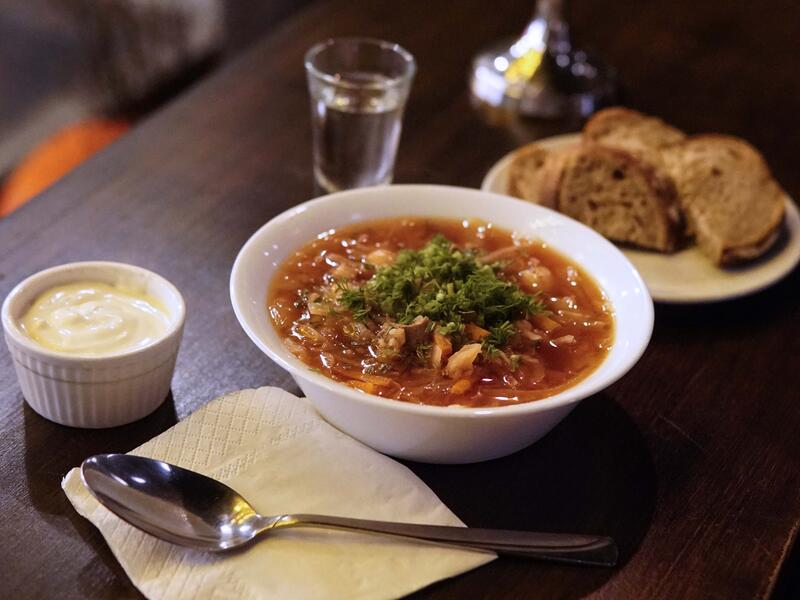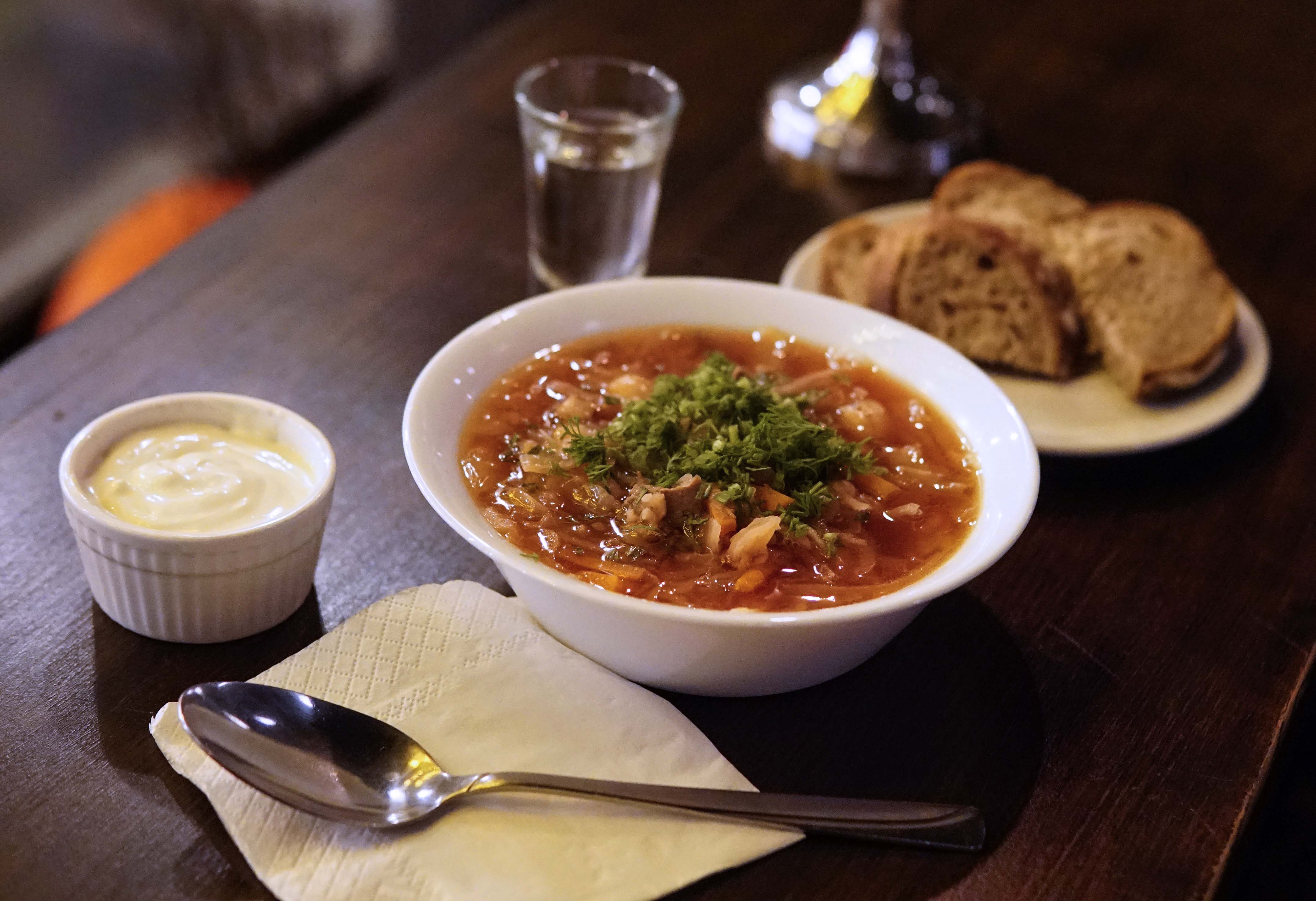
Borscht in Sloboda Ukraine during the 18th century
© Andrii Paramonov (Kharkiv)
One of the most widespread Ukrainian dishes, borscht, has undergone numerous changes over the centuries. Indeed, the cooking methods of the past were completely different from how we make it today. Only the 20th century would show a certain similarity to the present, as the ingredient composition has not significantly changed since then. This is precisely why I became interested in researching the historical variations of borscht and documenting their diversity. I occasionally used cookbooks for this purpose, but relied mostly on ethnographic descriptions, economic records, and court cases. Since 1995, I have been travelling across Sloboda Ukraine, either as a regional television journalist or as a historical researcher. Naturally, I had the opportunity to taste countless variations of borscht in different towns, some of which echo the traditions of the past. Therefore, this experience has also helped my work in preparing publications about this dish.
In this research, I had to consider several main aspects that would capture the rich diversity of borscht. First, there were the ingredients that were available for the population. Secondly, it was the season of the year when this dish was prepared. Thirdly, it depended on family’s wealth and the place where they lived, whether it was a town or a village, whether there was a large river nearby, vast forests, or whether the area was mostly steppe. Accordingly, this is exactly how I will structure my publication.
I would like to begin my series of publications on borscht with the 18th century, as this period is the most interesting in terms of richness and variety of its preparation. Several natural factors drove this diversity in Sloboda Ukraine. To begin with, plenty of wild animals made hunting highly productive. In addition, deeper rivers were teeming with diverse fish species. Furthermore, vaster forests provided a wealth of fruits and mushrooms. Finally, trade exchange between various social classes and merchants made spices widely accessible. At the time, peasants used them far more frequently than in later periods, when spices became a luxury that required money. Another crucial factor concerned the substantial number of peasants living on landlords’ estates but were not considered serfs yet. They were known as “Cherkasy subjects” and had a greater personal freedom. Therefore, 18th century provided far broader opportunities for variations of such an everyday dish as borscht.
Let us examine the various ingredients that could be part of an 18th-century recipe. The foremost and most essential ingredient was obviously meat. Pork, beef, veal, and mutton were common and well-known types of meat in our region. They could always be purchased or exchanged at weekly markets, wherever such markets existed – in large settlements, villages, and small towns. Peasants could prepare corned beef from these products and use it for cooking different dishes or store it in icehouses for preservation. Poultry was also widespread, though it was more a seasonal option, as geese and ducks were usually slaughtered in autumn after first frosts. As for chicken, the situation was slightly different. It could also be used, but only by limited segments of the population. This was related to the price of chicken, which was approximately fifteen kopiykas, while a dozen eggs cost twelve.
However, a more significant asset for most of the inhabitants of Sloboda Ukraine was the abundance of game. The forests were home to wild boars, wild goats, roe deer, hares, black grouse, and capercaillies. Various species of wild ducks and sandpipers could be found near the rivers, while the steppes were filled with quails, partridges, and great bustards. Notably, the great bustard was the largest flying bird, weighing up to twenty-four kilograms. According to rough estimates, there were 1.5 million of these birds in our region at the time.
The key ingredient in borscht was lard. It was used both fresh and salted, as well as in the form of cracklings. One of the remarkable properties of this product was that even old, salted lard retained its qualities. In fact, many housewives preferred precisely using this aged variant in borscht, as it gave the dish a distinctive aroma and flavor.
The third vital component was vegetables. Cabbage was an essential ingredient, used either fresh or as sauerkraut. It is worth noting that during the fermentation process cabbage was divided into two portions: the first one was “white,” which included the best parts of the cabbage head, while the second consisted of all the remaining trimmings. Beetroot took second place among the vegetables and was added in both fresh and fermented forms. Other vital ingredients included carrots, onions, and garlic. Peas, beans, and turnips were also commonly used. The latter served as a substitute for potatoes, which only began to be used among the peasantry after the famine of 1831-1832. Someone may ask: what about tomatoes? Unfortunately, this vegetable simply did not exist in our region in the 18th century.
The fourth essential ingredient in borscht was kvass. The majority of the population used rye kvass, although every housewife dreamt about cooking beetroot kvass. The use of this drink stemmed from the understanding that borscht should have a sour taste.
Perhaps not every modern housewife can imagine that grains was once added to borscht. First of all, millet or buckwheat were used, if those were unavailable, any type of grain could be added. It was important because the dish was meant to be hearty, that is why peasants filled it with whatever could increase its nutritional value.
The oil used for preparing borscht was mostly hemp, and less frequently linseed oil. Sunflower oil did not exist in Ukraine not only during the 18th century but also throughout the first half of the 19th century.
An extremely wide range of greens was added to borscht. Starting in spring, in addition to well-known dill, parsley, parsnip, lovage, celery, and green onion, people could also use nettle, sorrel, spurge, and lamb’s quarters. Later in summer, beet leaves were included until the root vegetable itself matured.
Fish-based borscht should be considered particularly unique. It was prepared not only during fasting period; in towns located near large rivers, such as the Siverskyi Donets, Vorskla, Oskil, and others, ordinary fish formed a part of the almost daily diet of peasants and other population groups. Cossack officers (starshyna) and nobles, who employed cooks (by the end of the 18th century they could even be foreigners), had a menu where more than fifty percent of the dishes were fish-based. In those days, in Kharkiv and other regimental towns large cuts of sturgeon and beluga were sold almost year-round. The most common local fish was predators like pike, zander, and burbot. Peasants usually preferred borscht with crucian carp and tench. However, there was another important aspect: when no main ingredient was available, any fish that was abundant at the time in small rivers and ponds would be added. Nevertheless, the best-tasting fish borscht was made with sea-roach, which was a favorite among most peasants and Cossacks, brought to Sloboda Ukraine from the Don region. I would consider such borscht a special dish, as it was prepared with particular care and respect. No housewife would even begin making it until every single required ingredient was at hand.
Crayfish were also added to borscht, contributing their own share of richness and aroma to the dish. In wealthy families, crayfish were boiled separately, and only the tails were used in cooking.
Mushrooms were another popular, though optional, addition. Right after summer rain shower, people gathered champignons, which were known for their incredible scent. Butter mushrooms and chanterelles were dried, and depending on the region, other types of mushrooms were also collected. In autumn, large quantities of blewits were harvested and stored. Mushrooms were particularly important during fasting periods, enhancing the flavour of nearly all the dishes of traditional peasant cuisine.
Eggs, both raw and boiled, were also frequently used in borscht.
And, of course, there was sour cream. This addition could be introduced twice: during the cooking process and again at the end, when the dish was served. Affordable for most of the population, it could improve the flavour of even the most basic, sparse borscht and make it far more delicious.
In certain localities, tovchenyky were added, combining several different ingredients. The most used ones were millet, eggs, greens, onions, and flour.
Alongside the borscht, most housewives kept mustard and horseradish on the table. Much like sour cream, these components helped to compensate for the meager seasonal ingredients of late winter and early spring.
Let us now consider how borscht preparation varied depending on the season and population’s wealth. Rural life was quite harsh for most of its inhabitants. Therefore, from the beginning of fieldwork until its very end, cooking the main dish was rather simple and, from our modern perspective, quite unusual. A housewife would prepare breakfast in the oven and place the borscht right beside it. Frequently, all the ingredients were added at the same time. The oven was closed then, and everyone left to work in the fields. In the evening, borscht was taken out of the oven, combined with sour cream, along with crushed lard mixed with garlic and greens, and then the dish was served. During the summer, dried bread rusks were often used instead of fresh bread. There was simply no time to bake bread, so stocks of rusks were prepared and stored regularly.
There was no time for sentimentality; people used whatever was at hand, what grew in the garden, or whatever the cellar or icehouse could provide. Naturally, if there were elderly women in the household, they might be left to prepare dinner in a more proper way. However, those who were able to work were usually in the fields rather than near the stove. The situation was completely different during holidays or in winter when the housewife stayed at home. Then everything depended on family traditions, wealth, and how successful the summer season had been.
In spring, most rural housewives found it quite difficult to gather all the ingredients needed for borscht, as garden vegetables and sauerkraut were running out. Travelling to a town or a large village with markets to purchase vegetables was not a widespread practice, and besides, these products were more expensive during the spring season. Exchanging them was also extremely difficult. By the end of the 18th century, many merchants took advantage of this situation and exchanged vegetables in villages for the goods women had produced during the winter.
It should be noted that garden vegetables did not always produce a good harvest. Occasionally, beetroots failed to grow entirely or were available only in very small quantities. In such years, all of it was used for making beetroot kvass, which was brewed in barrels. Buying enough beetroots to last the whole winter during these periods was an almost impossible task, affordable only for wealthy families. This is precisely why we can observe certain rituals connected with the preparation of beet kvass, such as blessing it or placing a cross made of dough on the bottom of the barrel. Meanwhile, a large number of peasants did not use beetroots at all during lean years, except perhaps on major holidays. Most commonly, rye kvass was used instead.
For the holidays, nearly every peasant woman prepared the kind of borscht that her family enjoyed. In winter, it was especially rich and hearty due to the use of domestic poultry or game. Families also visited fairs to purchase various spices, including allspice and black pepper, bay leaf, caraway seeds (were added to sauerkraut), and, of course, salt.
Wealthy rural housewives had it easiest, as they could afford to have all the necessary ingredients on hand regardless of the season. As for the Cossack officers, nobility, or high-ranking officials, their meals were prepared by cooks. These same cooks were responsible for purchasing and preparing all the necessary supplies. It was their specific culinary tradition of preparing borscht that has survived down to us in printed publications.
In conclusion, I would like to point out that one should not attempt to recreate the 18th-century cuisine unless prepared for the tastes of that period. For modern society, the recaptured flavour of that century would seem either extremely sour, overly bitter, or far too salty. While studying the cooking techniques of the past, we should not expect that the daily food of the peasants of Sloboda Ukraine was heartier or more delicious than the borscht of today.